How HOPE Donations Became My Extra Set of Lungs
Osaka Marathon 2026 Charity Runner Report
Overcoming the Blockers During Training
It was 8:20am on a Thursday morning in December. I was supposed to go out for an Osaka marathon training run yet the frigid -2 degree C air outside gave me pause. My instinct was to just stay inside, warm, next to the fireplace in this Nagano mountainside house. The thought of voluntary suffering felt so unappealing.
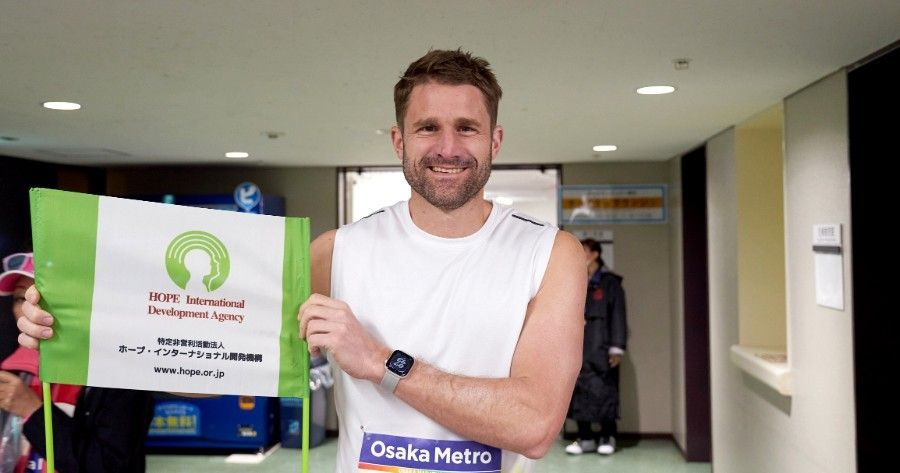
Then I remembered my commitment. I was going to run a marathon to raise funds for the esteemed HOPE Japan charity, generating funds for its Cambodia water projects. I changed into my running clothes, laced up my shoes, and off I went for a 28km training run in the cold winter air. I was shivering for the first kilometer, yet temporary sensations mattered less when a greater force motivates.
I was running for a cause greater than myself.
That morning run was a precursor for the mental battle to come. It taught me a vital lesson: running for a cause greater than yourself is the best way to ensure you finish a grueling race.
Ignoring the Body's Plea to Stop
After six months of training for the Osaka marathon, averaging 50–90km per week over six days of training, race day came in Osaka. The pre-race experience was easier than usual because of the ‘charity room’ provided to runners from HOPE Japan and other charities.
Once the gun went off, we pounded the pavement. The first 10km breezed by. Crowd support and the adrenaline of racing helped us all run faster than usual. The fatigue and sore muscles set in by km 11. I felt the usual tired muscles. The mental load was heavy, for I was already tired yet knew I wasn't even 30% of the way finished.
At km 12, I heard my name being screamed, "Brandon!"
Turned out it was the HOPE Japan team. Seeing them cheering for me sent a jolt of energy. I knew I wasn’t alone yet rather running with this charity team. I really benefitted from their support.
And the race went on through the commercial streets of central Osaka. I tried to keep my mind on anything except how tired I was becoming. I saw a strong contingent of Taiwanese runners. I also would notice how running stride form was so distinct among runners.
The Wall at Kilometer 30
Running past the km 30 marker, my legs felt heavy and stiff. Running this long, this fast was unnatural. The body told the mind to stop. I could hear my subconscious asking me, "Why would you want to suffer voluntarily? This isn't fun, right?" The IT bands on both my knees started to get sore, so every step was uncomfortable. Yet I realized I had over 10km to run. Caramba. The wall wasn't just a metaphor; it was a physical weight.
It crossed my mind whether I had enough physical power to finish the race or not. While I had been running 4:45 min/km pace so far in the race, I could only wonder if I had enough juice to continue all the way to the finish line all the way at the 42.19km mark. The temperature was unseasonably warm at 20 degrees C that balmy and sunny February day. The heat was stifling, and my breath grew shallow. I needed more than just oxygen.
Then it hit me: run for a cause greater than ourself.
Toughen up, Brandon, I urged myself. I was running for both the kind friends who donated to this charity cause, as well as kind people in Cambodia to benefit from this clean water project. They need me to continue. I can’t let them down by giving up. I had a cause to uphold. Keep on running.
The Surprising Power of External Motivation
Just imagining others who counted on me... gave a boost of energy.
It was similar to a revelation from renowned cold water swimmer Lewis Pugh.
When Lewis Pugh dove into the freezing waters near the North Pole on a swimming endeavor, he almost turned back to the boat from where he came. He was fighting his own internal voice telling him to quit. While ambition got him into the water, it was the external pull that kept him moving. Those cheering him on that day, including his boat support crew, motivated him. He realized that when our body screams at us to stop, the accountability from our supporters can give us a secondary engine.
As Pugh often teaches in his motivational work, our inner drive is usually the first thing to fade under extreme stress. That leaves a vacuum only external accountability can fill.
At kilometer 36, when my legs felt like lead, I remembered that I was carrying the hopes of friends, donors, and the on-site HOPE International team rooting for me to finish the race.
The Finish Line
Eventually, after pushing through an hour of pain, the finish line came within view. The last 12km were torturous yet the external motivation propelled me forward. Survival was the name of the game.
I resorted to focusing on my breathing and running form. To make sure my fatigued chest breathed enough, I inhaled for two steps while exhaling for one step. I put on faster music–at 180 beats per minute so my running cadence would reach near 180 strides per minute.
My two knees were hurting and also picked up cramps in my right calf muscle and, strangely, both forearms. The body just isn’t used to intense exercise for over 3 hours. Yet I wasn’t going to let down my supporters. My mantra was: Survive, mind over matter.
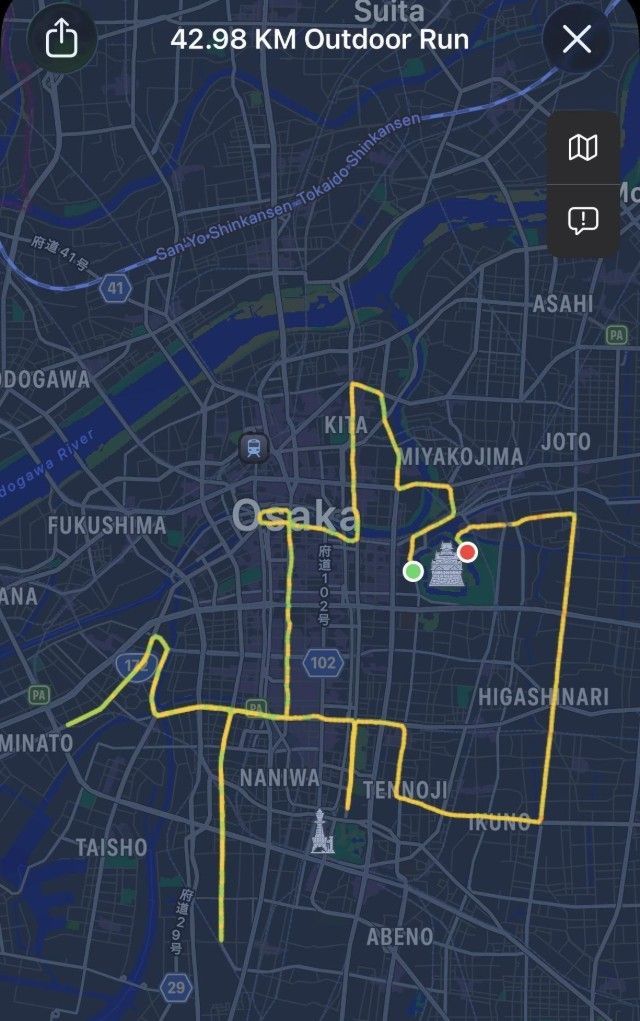
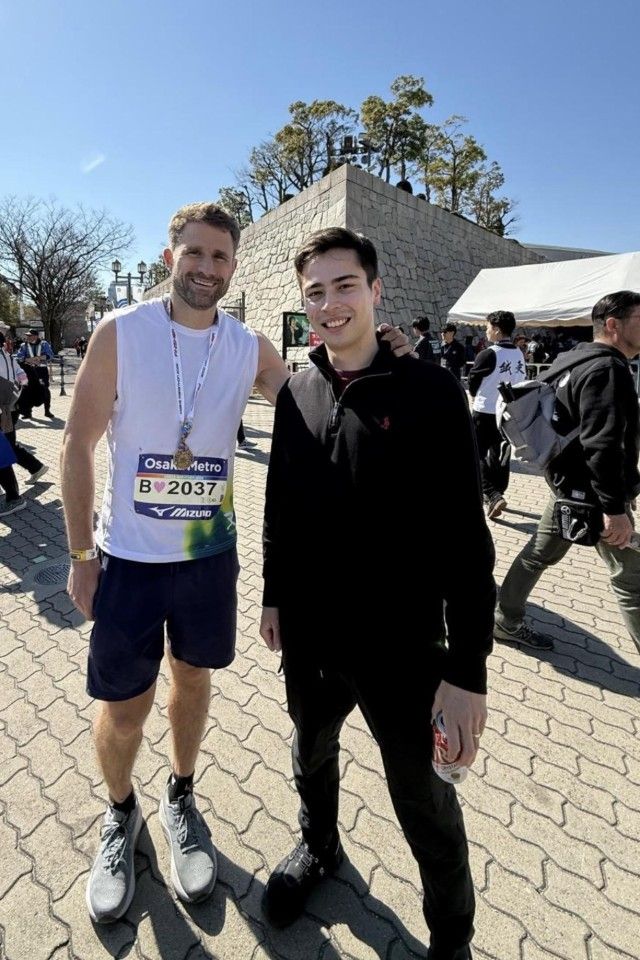
I made it to the finish line in 3:36, a personal best by 12 minutes.
I ended up puking twice in the bushes and found I couldn't even walk; I waddled like a wounded duck. I supposed this frail condition was the proof that I "didn't leave anything in the tank" and gave it my all.
I was running for a cause larger than myself. HOPE Japan.
If I could convey one thing from this article, it's how much better it is to run a marathon for a cause, such as raising funds and joining the HOPE marathon crew.
As the African proverb goes: "If you want to go fast, go alone. If you want to go far, go together".
A Shared Victory
I would like to thank the kind supporters who donated to my race. Sam R., JX, Mike A., Sasaki-san, Song, Joshua W, Ritchell, Rob C, Jonathan, Chris L, Suzuki-san, Mahboob, Brian O, Kuofang, Ed, Will C., Paul S., Song, and other kind friends. I'm so grateful that generous donors came along after a couple e-mails and two LinkedIn posts calling for donations. Your support boosted me through the race. It also will enable appreciative Cambodians to drink from life-sustaining clean water.
Thank you also to the kind HOPE Japan charity crew whose efforts made it possible for us to join the HOPE team, go to a pre-race carbo-loading dinner, and register for the race. Thank you!
Let's continue to support these vital causes through sport. If you're looking for your next challenge, join the HOPE marathon crew - it might just be the extra set of lungs you need.
HOPE's activities are supported by your donations.
CATEGORIES
UPCOMING EVENTS

22nd Annual "An Evening of HOPE" - Tokyo

25th Annual HOPE Dinner - Nagoya