Menstrual Hygiene Management in Ethiopian Schools: New Facilities, New Voices
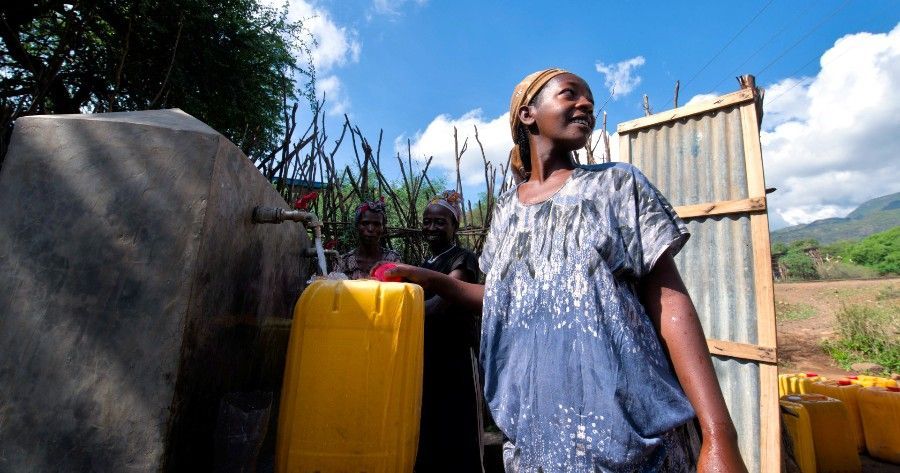
In October 2026, we visited Mirab Abaya District in Gamo Zone, southern Ethiopia. This is where we have been implementing the "Project to Promote Dignity and to Support Menstrual Hygiene Management (MHM) for Girls" since March 2026, funded by the Grant Assistance for Japanese NGO Projects of Japan’s Ministry of Foreign Affairs. This post shares the project’s progress, focusing on our model school, Feragossa Primary and Middle School.
Separate Boys' and Girls' Toilets and an MHM Center: Floors Complete
Construction is underway at the school for a boys’ toilet block, a girls’ toilet block, and an MHM center where girls can change and wash during their periods. When we visited in October 2026, all three buildings had been built up to floor level, and our technical staff expected them to be completed in about a month.
We had already installed LIXIL’s simple "SATO" toilet pans in some of the existing toilets. Teachers told us that the new pans produce less odor and, above all, are safe to use.
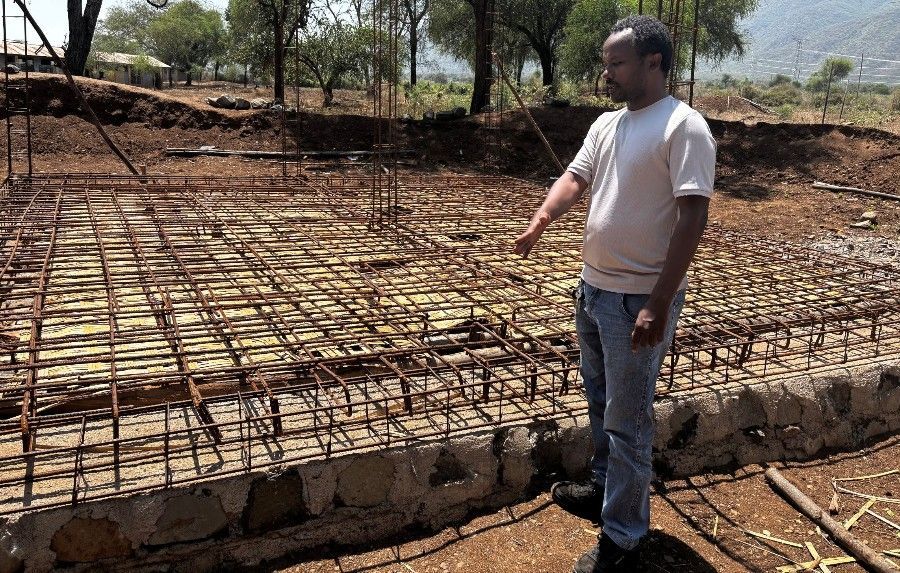
Construction of the girls' toilets
Little by Little, It’s Becoming OK to Talk About Periods
What pleased us most on this visit was a change beyond the buildings. The two teachers in charge told us that since they began teaching the girls about menstruation, a sense that it is OK to talk about periods has gradually taken hold. Some girls have even begun to tell their teachers when they feel unwell because of their period.
The school also has a WaSH (Water, Sanitation and Hygiene) Club, where students take the lead in cleaning toilets and school buildings and raising awareness about the importance of hygiene throughout the school.
When we asked the boys and girls of the WaSH Club whether they had any questions for us, one student asked, "When will the cloth pads be handed out?" The question came from a girl who, until recently, had not even known that cloth pads existed, and she asked it in front of the boys. To us, that was a big change.
We were also able to speak individually with five girls at the school. All five had their first period without knowing anything about menstruation. They told us that, out of embarrassment, they had never talked to their parents or friends about it, and that they miss three to five days of school every time they have their period.
Missing three to five days a month adds up to more than a month of lost lessons each year. That is why girls need both toilets they can use with confidence and adults they can talk to.
Sample pads provided by Unicharm
Community Dialogue Brings Water Closer to the School
At the same time, a major challenge remained. Although safe water reaches the village, it had not yet been piped to the school. The WaSH Club members clean the toilets and school buildings twice a day, in the morning and in the afternoon, but without water they cannot clean them properly. Nor can the SATO toilets be flushed without water.
We had been told that relations between neighboring communities were the reason. Rather than intervening directly to solve the problem, HOPE staff focused on creating opportunities for dialogue.
As part of the project, HOPE holds regular meetings between the district government and the community. We put the issue on the agenda at one of these meetings and then left it to the community to work out a solution. As a result, it was agreed that water would be piped to the school from a nearby source. We are now calculating the quantities of pipe and other materials needed and preparing for installation.
Buildings Alone Are Not Enough
On this trip, we also visited another school in the district where the government has built an MHM center. However, the center had not yet been handed over and was still locked. The girls’ toilets had no doors. The school also has a Girls’ Club meant to raise awareness about menstruation and hygiene, but no menstrual education had yet taken place.
A teacher told us that it had been difficult to turn MHM efforts into concrete activities.
A building alone does not change girls’ daily lives. That is why our project combines construction with training for teachers and community leaders, Girls’ Club and WaSH Club activities, and cloth-pad making. In the project’s third year, we hope to invite teachers from other schools for training and to work with the Ethiopian government so that government-built MHM centers are also put to good use.
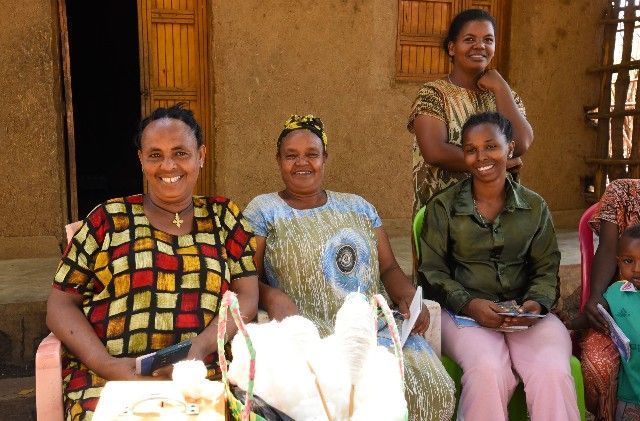
Members of a women’s Self Help Group (SHG), who help spread understanding of menstruation in the community
Training for Teachers and Community Leaders to Begin in December 2026
In early December 2026, we will begin MHM training for school teachers and community leaders, led by Dr. Frenesh, a female physician who has worked with us since a previous project. At the end of the training, we plan to distribute "Dignity Kits" containing cloth pads and other items.
By completing the toilets and MHM center, bringing water to the school, and enabling teachers to educate students about menstruation, we are working toward the day when no girl has to miss school because of her period. We will keep moving forward, one step at a time. Thank you for your continued support.
Related Article
HOPE's activities are supported by your donations.
CATEGORIES
UPCOMING EVENTS
22nd Annual "An Evening of HOPE" - Tokyo
25th Annual HOPE Dinner - Nagoya