Empowering Girls in Ethiopia Through Menstrual Health
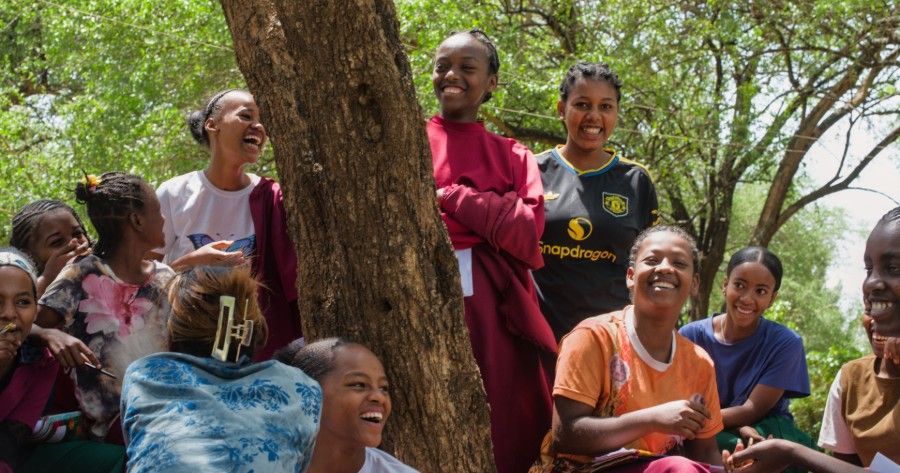
Meselech, a girl living in Mirab Abaya in southern Ethiopia, noticed one day that her clothes were stained with blood. She wasn't injured, yet the bleeding wouldn't stop.
Terrified, she ran to her friend for help. Her friend explained that she also experienced the same thing every month, and that it wasn't a disease or an injury.
Relieved to learn this for the first time, Meselech soon faced another challenge: how to manage her period.
Disposable pads are far too expensive for daily use. Instead, she uses old cloth she finds at home. Because menstruation is considered taboo, she washes the cloth secretly in a nearby water channel so no one will see.
At school, she cannot manage her period at all. The toilet is a broken, shared facility with no lock - and no running water. Whenever her period comes, she has no choice but to stay home and miss school.
Misunderstanding Menstruation Limits Girls' Participation in Society
What happened to Meselech is not an isolated case. Many girls in Mirab Abaya face the same reality.
Because menstruation is taboo, only 7% of girls feel they can talk to a parent or teacher about it. There are no school lessons on menstrual hygiene management (MHM), so only 35% of girls have heard about menstruation before their first period.
As a result, missing school during menstruation has become "normal", and girls lose valuable learning opportunities.
Promoting Women's Participation Through Menstrual Hygiene Management
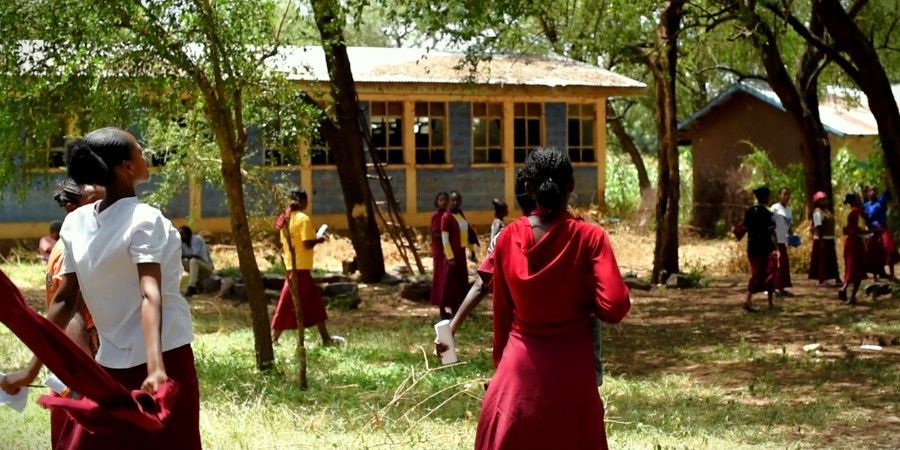
HOPE has long supported community self-reliance in Mirab Abaya through water projects and income generation programs. Through this work, we saw clearly how menstrual challenges were limiting girls' education - and ultimately affecting women's participation in society.
Without a safe and supportive school environment, girls cannot take the first steps toward independence. This is why we decided to launch a new initiative focused on menstrual hygiene management (MHM).
Our Three Key Approaches
1. Improving School Facilities
We are creating safe, hygienic, and private spaces so girls can attend school comfortably - even during menstruation.
- New Toilets: We are installing new toilets with locking doors and LIXIL's SATO toilet system, a simple and innovative solution that greatly improves hygiene.
- MHM Centers: Dedicated rooms where girls can manage their periods or rest when feeling unwell. These centers are equipped with essential hygiene supplies.
2. Menstrual Hygiene Management (MHM) Education
To spread accurate knowledge among students, teachers, and the wider community, MHM will be integrated into school education.
- Development of MHM teaching materials
- Training for teachers
- Classroom lessons on menstrual hygiene
- Distribution of dignity kits, including reusable cloth pads
3. Community Awareness Activities
Menstrual challenges cannot be solved at school alone. Cultural taboos and economic hardship make it difficult for girls to manage menstruation on their own.
We are forming women's groups that combine MHM awareness activities with income generation programs. By empowering women with knowledge and economic opportunities, we aim to create a community-wide environment where girls can manage menstruation safely and confidently.
The Future We Aim to Build
In the first year (2026), our activities will reach two villages and one primary school, supporting 9,106 people. Our goal is for over 90% of girls to gain accurate knowledge of menstrual hygiene and have access to appropriate materials and safe facilities.
From 2027 to 2028, we will gradually expand our activities. Ultimately, we aim to promote menstrual hygiene management throughout the entire Mirab Abaya district.
Support from LIXIL Corporation
LIXIL Corporation, a global leader in water and sanitation solutions, is generously providing SATO toilets for this project. Their support enables us to create cleaner, safer toilet environments that girls can use with confidence.
Supported by Japan's NGO Partnership Grant
This project is funded by Japan's Ministry of Foreign Affairs under the 2025 NGO Partnership Grant. Through collaboration between the Ministry of Foreign Affairs, private companies, and NGOs, we are working to build a sustainable model that strengthens community-led development.
HOPE's activities are supported by your donations.
CATEGORIES
UPCOMING EVENTS
22nd Annual "An Evening of HOPE" - Tokyo
25th Annual HOPE Dinner - Nagoya